Instant Zooplankton® Products

Zooplankton are small animals that feed on phytoplankton (microalgae) or other zooplankton. Reed Mariculture is proud to offer live zooplankton as our new Instant Zooplankton® product line for aquaculture applications. Our products include rotifers (Brachionus plicatilis and Brachionus rotundiformis), copepods (Parvocalanus crassirostris and Tigriopus californicus), Brine Shrimp Eggs (Artemia) and Mysid Shrimp.

For rotifer feeds and enrichment, please see our Rotigrow products.

For more information about working with rotifers, see our rotifer support pages.

For growing rotifers on a small scale, we also offer rotifer starter kits, through our Reef Nutrition website.


Brachionus plicatilis (L-type rotifer)

Order Online

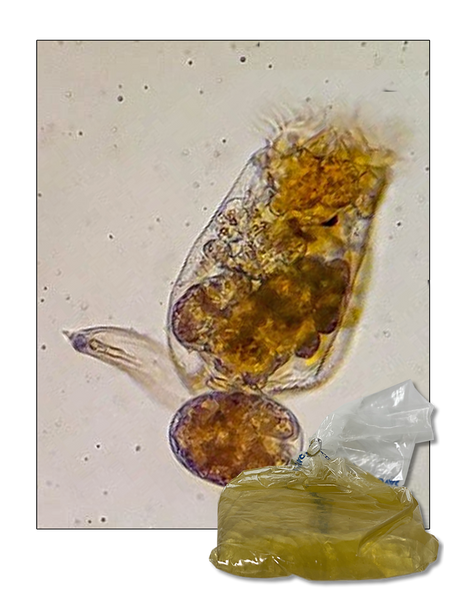
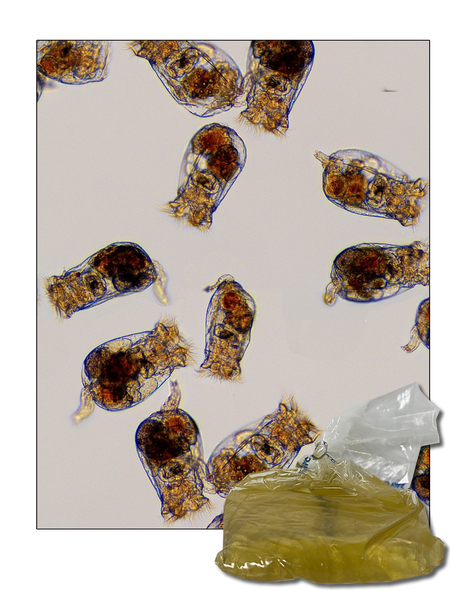
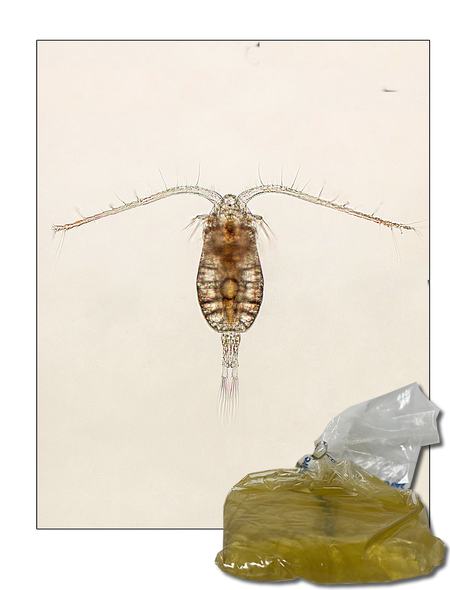
Reed Mariculture supplies pure cultures of a strain of Brachionus plicatilis (L-type) with a typical lorica length of about 160 µm. This species is euryhaline, capable of thriving in salinities of 5-40 ppt. It is available in quantities from 1 million to 1.5 billion, concentrated and packaged into "breathable" bags.
Prices and Shipping Times

Millions of Rotifers Price Approximate Shipping Time
1 million $20 1 - 3 business days
5 million $75 1 - 3 business days
10 million (bulk) $100 (volume discounts available) 1 - 5 business days

For live rotifer orders in quantities larger than 5 million, please contact us for discounted pricing.


Brachionus rotundiformis (S-type rotifer)

Ordering Info

Brachionus rotundiformis is a challenging product to ship. If you would like to purchase them, please contact us directly and we'll set up the order for you.

Brachionus rotundiformis is a cyclical parthenogen, meaning that it alternates between parthenogenesis (asexual reproduction) and sexual reproduction. Parthenogenesis allows it to rapidly colonize an environment given favorable environmental conditions.
They have been used with great success in the larval culture of more than 60 species of marine finfish and 18 varieties of crustaceans. B. rotundiformis provides an excellent food source for hatchlings due to the following attributes:

  • Easily captured due to their slow motility.
  • Uniform distribution in the water column.
  • Readily swallowed by larvae due to their small size (90-150µm).
  • Their content can be manipulated to meet hatchling nutritional and survival requirements and they are enriched with fatty acids, antibiotics, etc. to transfer to the developing fish larvae.

These rotifers are grown in flow-through systems using Atlantic Ocean water (UV-treated, chlorinated, then de-chlorinated).

Orders will be drop-shipped directly from Marbionc via 2-day transit.

Prices and Shipping Times

Millions of Rotifers Price Approximate Shipping Time
0.50 $22.50 2 - 5 business days
0.75 $27.50 2 - 5 business days
1 $30.00 2 - 5 business days
5 $115.00 2 - 5 business days
10 $150.00 2 - 5 business days
20 $180.00 2 - 5 business days
30 $270.00 7 - 10 business days
50 $375.00 7 - 10 business days
60 $450.00 7 - 10 business days
70 $525.00 7 - 10 business days
100 $630.00 7 - 10 business days
More than 100   14 business days

Rotifer Floss (Filter)

Order Online

Rotifer Floss is a new innovation for cleaning detritus and ciliates out of rotifer systems. Keeping the water and tank clean from detritus (rotifer waste) is critically important in maintaining healthy, stable cultures - especially in high density systems.

How It Works

Detritus contains high levels of bacteria which are sticky. Rotifer Floss is a loose weave filter that allows water to easily pass through it, but has a high surface area which the detritus sticks to.

Cleaning the Filter

When the floss is full of detritus simply lift the filter out of the rotifer tank, lets it drain for 10 seconds over the tank, then wash it down with a garden or pressure hose or in a sink. The detritus easily falls off the filter under pressure and it can immediately be put back into the rotifer system. It should take less than 1 minute for the entire process.

If you have a small rotifer system (1 to 20 gallons) we recommend stirring the water up prior to putting the filter back in. This will lift detritus off the bottom of the tank and back into the water column where the filter will remove it. Once the water is well stirred and moving, put the filter back in.

How often should the filter be cleaned?

We recommend cleaning the filter daily. A regularly cleaned filter will remove the maximum about of detritus. There is no downside to cleaning it often.


Compact Culture System

Order Online

The APBreed Compact Culture System (CCS) is designed to make benchtop-scale culture of zooplankton easy and reliable. LEARN MORE

Back to Menu

Parvocalanus crassirostris

Ordering Info

Parvocalanus crassirostris is a challenging product to ship. If you would like to purchase them, please contact us directly and we'll set up the order for you.

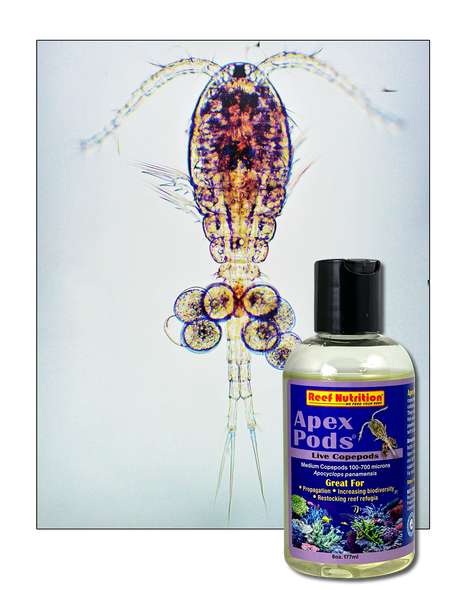
Parvocalanus crassirostris is a small, pelagic calanoid copepod. The nauplii (newly hatched larvae) are small measuring in the 40-100 µm range, making them a suitable feed for small-gape fish larvae. Adults are in the 200 to 400 µm range.

Note: Orders will ship on Tuesday only, via FedEx Overnight or FedEx 2-Day

Rotifers
P. crassirostris Nauplii
Rotifers
Parvocalanus crassirostris
  • Good source of antioxidants and Vitamins C and E
  • The movements of copepods and their nauplii trigger the feeding responses in larval fish
  • This species is being used in marine ornamental aquaculture as well as large-scale finish aquaculture
  • It has been successfully used as a first prey item to culture species of snapper, grouper, yellowtail, seahorses, pipefish, dwarf angelfish and many others
  • The use of copepods as a first feed has been associated with a decrease in fish malpigmentation and deformity

Tigriopus californicus

Rotifers

Tigriopus californicus are attractive large (250-1700µm) red copepods that swim upwards with a stimulating, jerky swimming motion that is attractive to both fish and people. They are perfect for culturing and restocking reef tanks & refugiums, as well as an excellent feed for fish, including mandarins and pipefish. They breed rapidly producing hundreds of eggs per female. Their red coloration is indicative of their high carotenoid content (particularly Astaxanthin), which supports vivid coloration in species that feed on them.

Reed Mariculture sells Tigriopus califoricus as Tigger-Pods® through our Reef Nutrition website.

Back to Menu

Ordering Info

At this time of year, our supply of Artemia is somewhat limited. If you would like to purchase them, please contact us directly.

Not all GSL artemia are the same quality. What one company may label as 90% may be equivalent to another company's 85%. The true measure of quality is the nauplii per gram (NPG) count and not simply a hatch rate designation.

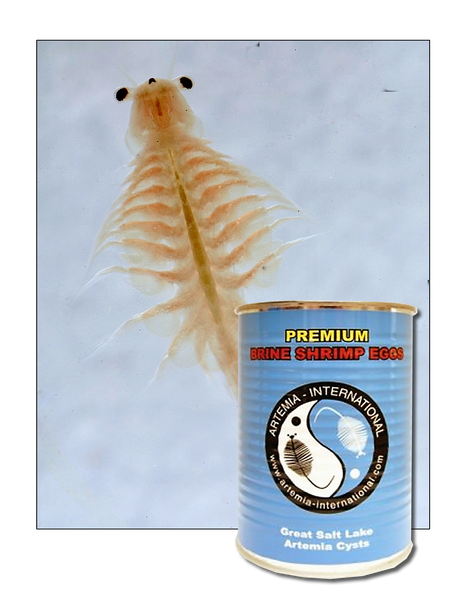
Our GSL Artemia 90% have an NPG count of 250,000 - the average for 90% GSL from other companies is 245,000. These are among the highest quality available anywhere. These GSL cysts are over-wintered, washed, dried, and tested under strict guidelines before categorizing into the different hatch rate categories. Average nauplii size at hatching is 440 microns. The cans are 16 oz/454 grams each and should be stored in cool dry place (~4C).
Guaranteed Analysis: Protein - 60%, Fat - 24%, Ash - 4.4%, Moisture - 8.5%

Back to Menu

Ordering Info

Mysid shrimp are a challenging product to ship. If you would like to purchase them, please contact us directly and we'll set up the order for you.

Our Mysids are grown in a lab, in a close recirculating system with UV sterilization and are guaranteed to be disease free.

They are also free of parasites such as hydrozoans which is something that cannot be guaranteed from suppliers of wild caught mysids and plankton.

The mysids are 20 days or older. These animals are mature adults capable of reproducing. Their size range is 1/2 - 3/4 inch.

They are great for finicky eaters such as wild-caught seahorses, reef tank inhabitants and other marine organisms that are hard to feed.

Note: Mysid shrimp are very difficult to culture because they are highly cannibalistic. Our mysids are sold as "feeds" and we are not able to provide support for culturing or propagating them.

Please contact us for pricing.

Back to Menu